
TL;DR
Law firm management is the structured approach to running a legal practice by aligning people, processes, technology, and finances. It covers leadership, financial controls, workflows, staffing, and client experience. Without it, even technically strong firms plateau, lose cases to admin delays, and struggle to scale past a handful of attorneys.
This guide covers how law firms are structured, the steps to build effective management systems, best practices for PI firms, and which tools support day-to-day operations at any scale.
Law firm management is what separates practices that grow from those that plateau. Legal expertise wins cases. Management wins the business.
Most firms are built by great attorneys, not trained operators. The result: inconsistent intake, missed deadlines, and cash flow that never matches caseload. Case Status’s 2025 State of Legal CX Report found only 19% of attorneys consider their firm truly tech-savvy. That gap is a management problem.
This guide explains what effective law firm management looks like, how law firms are structured, and which strategies help practices run efficiently at every stage of growth.
What Is Law Firm Management?
Law firm management is the discipline of running a legal practice like a well-structured organization. It aligns people, processes, technology, and finances to deliver consistent outcomes while maintaining profitability.
Without it, even high-performing attorneys spend significant time on tasks that have nothing to do with legal work: chasing documents, managing staff conflicts, reconciling billing errors, and fielding client complaints about communication gaps.
It covers four core areas:
- Financial management: billing, accounting, budgeting, and trust accounting controls.
- Personnel: hiring, training, compensation, and staff retention.
- Operational systems: case management, workflows, and document handling.
- Client relations: intake, communication protocols, and client satisfaction.
For personal injury law firm management specifically, this becomes more complex. PI firms must also coordinate medical providers, track liens, and manage settlement timelines alongside standard operations. Strong legal case management software is what holds all these moving parts together.
How to Structure Your Law Firm
Law firm structure defines how authority flows, how work gets assigned, and how decisions get made. Getting this right early prevents the confusion that slows down growing practices.
Common Law Firm Organizational Structures
Most firms operate under one of three structural models:
- Hierarchical: partners at the top, associates below, support staff at the base. Clear authority, but can slow decision-making.
- Departmental: teams organized by practice area. Works well for multi-specialty firms where PI, family law, and litigation run separately.
- Flat: minimal layers between leadership and staff. Common in boutique or solo practices where speed and flexibility matter more than formal hierarchy.
Legal firm structure is not one-size-fits-all. The right model depends on caseload type, firm size, and growth plans. How to structure your law firm starts with understanding where authority needs to sit and where it currently does not.
A deeper breakdown of law firm management structure covers how leading PI practices organize teams and reporting lines to reduce bottlenecks and improve accountability.
How to Manage a Law Firm: 7 Practical Steps
Managing a law firm well requires deliberate systems, not improvisation. These seven steps build the foundation that supports both current operations and future growth.
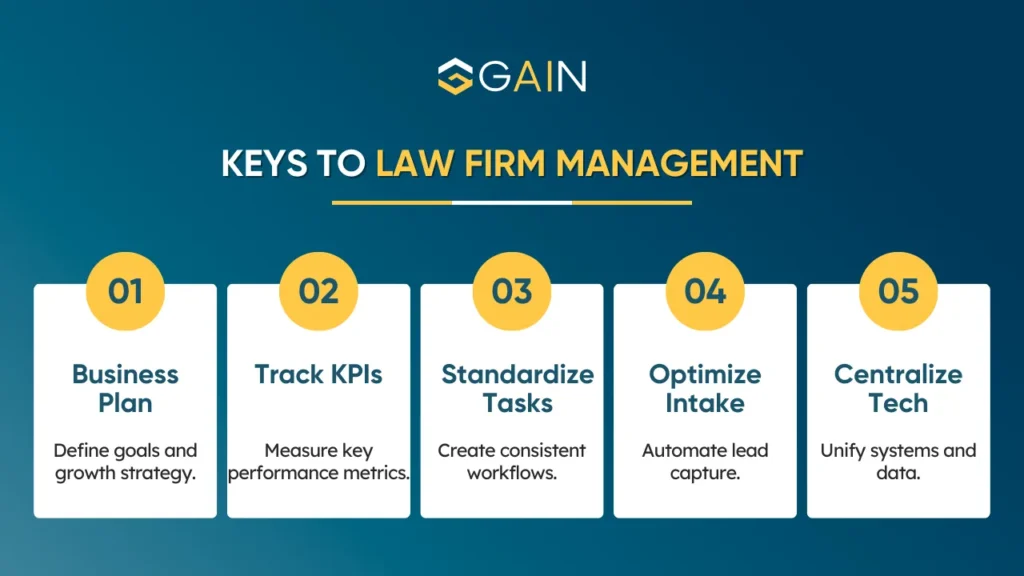
- Write a business plan. Define practice areas, revenue targets, staffing model, and competitive positioning. This is the foundation of any effective law firm business management strategy.
- Define KPIs. Measure what matters: intake conversion rates, average case duration, revenue per attorney, and settlement turnaround time. How do law firms ensure reporting consistency across all offices? Shared KPI dashboards and standardized metrics are the standard answer.
- Build a procedures manual. Document every repeatable task: intake steps, billing protocols, case documentation standards, and communication rules. This is how firms reduce dependency on individual staff and maintain quality through turnover.
- Streamline client intake. Delayed or incomplete intake is the most common first bottleneck. Digital forms, automated follow-ups, and structured qualification improve conversion and reduce manual handoffs.
- Create repeatable law firm processes. Standardize medical record requests, provider communication, and settlement tracking. Repeatable law firm processes cut delays and improve internal accountability.
- Hire a dedicated office manager. As the firm grows, attorneys should not manage daily operations. A dedicated office manager handles staff coordination, vendor relationships, and financial reporting.
- Invest in a practice management platform. Technology is the backbone of modern law office management. A strong platform centralizes case data, documents, communication, and reporting in one place.
Best Practices for Managing a Law Firm
The best practices for managing a law firm go beyond process documentation. They require consistent execution across leadership, finance, and client communication. Firms that improve law firm efficiency start by auditing where time and revenue are being lost before adding new tools.
Below are the three areas where management discipline delivers the most measurable return across practices of any size.
Financial Vigilance
Financial oversight is a cornerstone of effective law firm management. Key practices include:
- Monthly cash flow reviews.
- Clear trust account controls and reconciliation.
- Forecasting settlement timelines to manage AR.
- Monitoring medical liens and outstanding receivables.
Firms that lack this visibility often discover revenue leakage only when cash flow becomes a problem, not before it does. For PI practices, this is compounded by the gap between treatment completion and settlement payment, which can run months or longer on contested cases.
Consistent Client Communication
Clients who receive regular updates are more satisfied, more likely to refer, and less likely to dispute fees. Law firm service management includes setting communication standards: how quickly inquiries are answered, how often case updates go out, and who is responsible for client-facing contact.
Leadership and Culture
Effective law firm management requires clear leadership. Defined reporting lines, structured decision-making, and a culture where accountability is expected, not optional, directly impact staff retention and case quality.
Mentorship programs, transparent compensation structures, and regular team feedback improve morale and reduce turnover, which is one of the most expensive operational problems a growing firm can face.
How do law firms ensure reporting consistency across all offices when they scale? Strong management firms standardize KPIs, use shared dashboards, and build firm-wide workflows that do not depend on individual office managers making isolated decisions.
Personal Injury Law Firm Management: Unique Considerations
Personal injury law firm management adds complexity that general legal office management does not cover. PI firms must handle medical documentation, Letters of Protection, lien tracking, and extended settlement cycles alongside standard operations.
Specifically, effective PI management requires:
- Tracking treatment progress across multiple providers per case.
- Managing LOPs and ensuring liens are perfected before settlement.
- Coordinating between attorneys, paralegals, and medical staff without duplication.
- Monitoring statute of limitations across a high-volume docket.
Personal injury law firm management also requires a different approach to financial oversight. Settlement timelines are unpredictable, medical bills arrive at different stages, and lien reductions can change the final disbursement amount significantly. Firms without real-time financial visibility into active cases often discover cash flow problems only after the fact.
Without structured systems, these tasks rely on individual memory and email threads, which creates real risk. Legal software for law firms built for PI workflows automates much of this coordination, reducing the administrative burden on attorneys and paralegals.
Tools for Effective Legal Office Management
Modern legal office management depends on integrated tools, not disconnected software. The right platform supports case tracking, document management, client communication, and financial reporting without requiring staff to switch between five different systems.
Firms evaluating how to manage law firm operations at scale typically ask three questions before choosing a tool: Does it reduce manual handoffs? Does it give leadership visibility into case and financial status? And does it integrate with the systems the team already uses?
Key categories of tools PI firms evaluate:
- Practice management platforms: centralize cases, deadlines, documents, and billing.
- Document automation: template-based drafting, e-signature routing, and version control.
- Communication tools: secure client portals, automated status updates, and internal messaging.
- Financial software: trust accounting, invoicing, and payment tracking.
- Analytics dashboards: case aging, settlement timelines, and staff productivity metrics.
Choosing between platforms comes down to three questions: Does it reduce manual handoffs? Does it give leadership visibility into both case and financial status simultaneously? And does it integrate cleanly with the systems the team already uses day to day?