
TL;DR
The benefits of case management software for personal injury law firms include streamlined workflows, centralized case data, improved medical coordination, stronger compliance, and better settlement outcomes. Purpose-built platforms replace fragmented manual processes with structured, automated systems that reduce errors and accelerate case resolution across the full docket.
This guide covers what case management software does, the core advantages it delivers for PI firms, real use cases, and what to look for when evaluating a platform.
The benefits of case management software are most visible in high-volume practices where the gap between a well-organized firm and a disorganized one translates directly into case outcomes. Personal injury law is exactly that kind of practice.
PI firms manage simultaneous treatment timelines, medical records, lien balances, statute deadlines, and settlement negotiations across dozens or hundreds of active matters. Understanding what case management means operationally is the starting point for understanding why the right software changes how a firm functions.
This guide covers the specific benefits of case management solutions for PI practices, with practical examples of how each advantage plays out across the case lifecycle.
What is Case Management Software?
Case management software is a centralized platform that helps law firms organize cases, automate workflows, manage documents, and track deadlines in one system. For a detailed breakdown of how these platforms compare, the guide on legal case management software covers the core features and selection criteria for PI-specific tools.
For personal injury firms specifically, case management software goes beyond document storage and scheduling. It manages medical record requests, tracks lien balances, coordinates provider communication, and monitors case progress from intake through settlement in one structured workflow.
What Are the Key Benefits of Case Management Software?
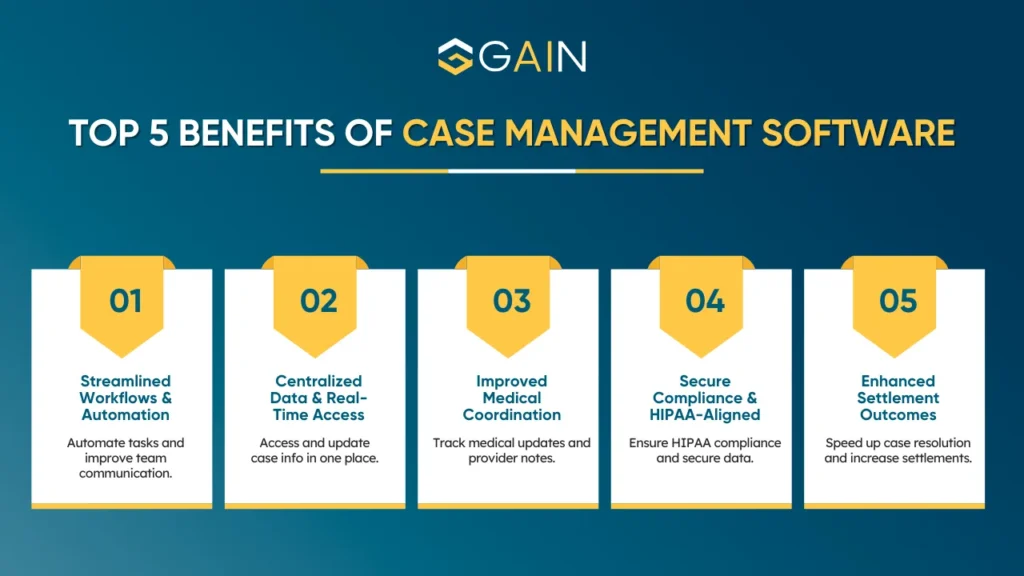
The case management software benefits most relevant to PI practices are the ones that affect case speed, documentation quality, and attorney capacity. Here are the five that matter most.
1. Streamlined Workflows and Automation
Manual tracking of medical records, provider updates, billing, and insurance communication slows every case. One of the clearest advantages of case management software is its ability to automate these repeatable tasks so they happen without staff intervention.
Automation in a PI-specific platform typically covers:
- Document requests sent to providers on a set schedule.
- Medical record follow-up triggered by elapsed time.
- Statute of limitations alerts with escalation thresholds.
- Lien status tracking with automatic updates as amounts change.
- Task assignments when a case moves to a new stage.
When these steps run automatically, attorneys spend less time on administration and more time on the judgment-driven work that actually moves cases forward. This is the most tangible benefit of case management system adoption for high-volume PI practices.
Automation also reduces the dependency on individual staff members to remember routine follow-ups. When a paralegal leaves or a case changes hands, the workflow continues without interruption because the system, not the person, is driving the process.
2. Centralized Data and Real-Time Access
One of the biggest case management software benefits for PI teams is eliminating the fragmentation that comes from managing cases across email, spreadsheets, and shared drives. A unified dashboard gives every team member access to the current state of every case without asking for updates.
Centralized access means attorneys and paralegals can find:
- Case facts and intake documentation in one place.
- Medical treatment progress and provider communication history.
- Lien documents and current balance updates
- Negotiation notes and settlement history.
- Deadline calendars and task status for all active matters.
This single-source approach reduces errors that come from working with outdated information and speeds up every decision that depends on knowing where a case stands right now.
3. Improved Medical Coordination
PI cases are unusually dependent on medical documentation. Treatment timelines, provider records, billing summaries, and lien amounts all feed directly into demand packages and settlement negotiations. When medical coordination is manual, records arrive late, follow-ups fall through, and demand packages go out incomplete.
A case management system built for PI addresses this by tracking every medical record request, flagging overdue responses, organizing records by provider and date, and keeping lien information current as treatment continues. This benefit of case management solutions is most visible in firms handling cases with multiple treating providers.
4. Compliance and Security
PI firms handle protected health information governed by HIPAA and state privacy laws. Compliance controls built into the platform are more reliable than individual staff habits. For context on how law firm management structures support compliance firm-wide, see the full guide.
Built-in compliance features typically include:
- Encrypted document storage and secure file transfer.
- Role-based access controls so staff only see what they need to.
- Audit trails tracking who accessed or modified case records .
- Compliant communication channels for client and provider contact.
These controls reduce risk without adding administrative overhead. The benefits of case management in this area are both operational and reputational: firms that protect client data consistently avoid the violations that damage both.
5. Stronger Settlement Outcomes
The benefits of case management software ultimately show up in settlement results. When documentation is complete, deadlines are met, and lien positions are accurate, attorneys negotiate from a position of strength rather than scrambling to fill gaps as the insurer applies pressure.
A well-organized case file with complete medical records, documented treatment timelines, and clear lien balances gives the attorney everything needed to support a strong demand. Insurers are less likely to dispute well-documented claims, and when they do, the attorney has the evidence to hold the position through negotiation.
The case management software benefits on settlement outcomes are cumulative. Every accurate record, every met deadline, and every resolved lien before demand goes out adds to the credibility of the claim and the leverage of the attorney.
Practical Use Cases for Case Management Software in PI Firms
The case management software benefits described above translate into specific operational improvements that PI firms experience day to day.
- Faster medical scheduling: rather than coordinating directly with multiple providers by phone, case managers track scheduling status within the platform and flag delays automatically.
- Automated lien tracking: the system monitors lien statuses across all active cases, sends alerts before settlement, and maintains a running balance for each provider.
- High-volume evidence organization: police reports, imaging results, medical records, and billing documents are filed directly within the case record, not in email threads or shared folders.
- Client communication: clients receive status updates on treatment progress, case milestones, and next steps without requiring attorney time for each contact.
- Administrative workload reduction: paralegals spend less time chasing records and updates, and more time on tasks that require judgment and preparation.
What Are the Benefits of Legal Automation for PI Practices?
Legal automation extends the case management software benefits by reducing human error and eliminating the manual steps that slow case progression. The guide on new technology for law firms covers how adoption of these tools has shifted across PI practices in recent years.
The operational advantages of legal automation in a case management context include:
- Real-time case monitoring without manual status requests
- Automatic reminders and task triggers tied to case milestones
- Error reduction in deadline tracking and document filing
- Faster intake-to-settlement workflows with defined handoff points
- Better coordination between legal and medical teams on shared cases
For PI firms specifically, automation addresses the highest-risk administrative failure points: missed statute deadlines, delayed medical record requests, and lien oversights that surface only at the point of settlement.
Legal automation is not about replacing attorney judgment. It removes administrative steps so attorneys spend time on work that requires their expertise. The benefits of case management solutions built around automation are most visible in firms where attorney time was previously consumed by routine follow-up.
What to Look for in Case Management Software for PI Firms
Not all legal software for law firms is built for PI. Many general legal platforms cover scheduling and billing well but lack the medical coordination, lien tracking, and settlement management features that PI workflows require.
When evaluating platforms, focus on five factors:
- PI-specific functionality: medical record tracking, LOP management, lien monitoring, and statute alerts should be core features, not add-ons.
- Workflow automation depth: the platform should automate follow-up, escalation, and task assignment without requiring manual triggers.
- Reporting and visibility: leadership should be able to see case aging, financial exposure, and workload distribution without asking individual attorneys.
- Integration capability: the platform should connect to document management, billing, and provider communication tools rather than requiring duplicate data entry.
- Implementation and support: the total cost includes setup, training, and ongoing support; a lower subscription price with poor onboarding is not actually cheaper.